Defense in Depth: Administrative Tier for SMB Cybersecurity
- Geoff Ramsay Software Architect · Privacy Professional · AI Specialist · Successful Startup CTO — Software Architecture · Cloud Architecture · AI & Machine Learning
- IT , Security
- 2026-05-14
You can have the best firewall money can buy and cameras on every door. But if your team doesn’t know how to recognize a phishing email - or if there’s no written policy for what to do when something goes wrong - your defences have a gap that no piece of hardware can fill.
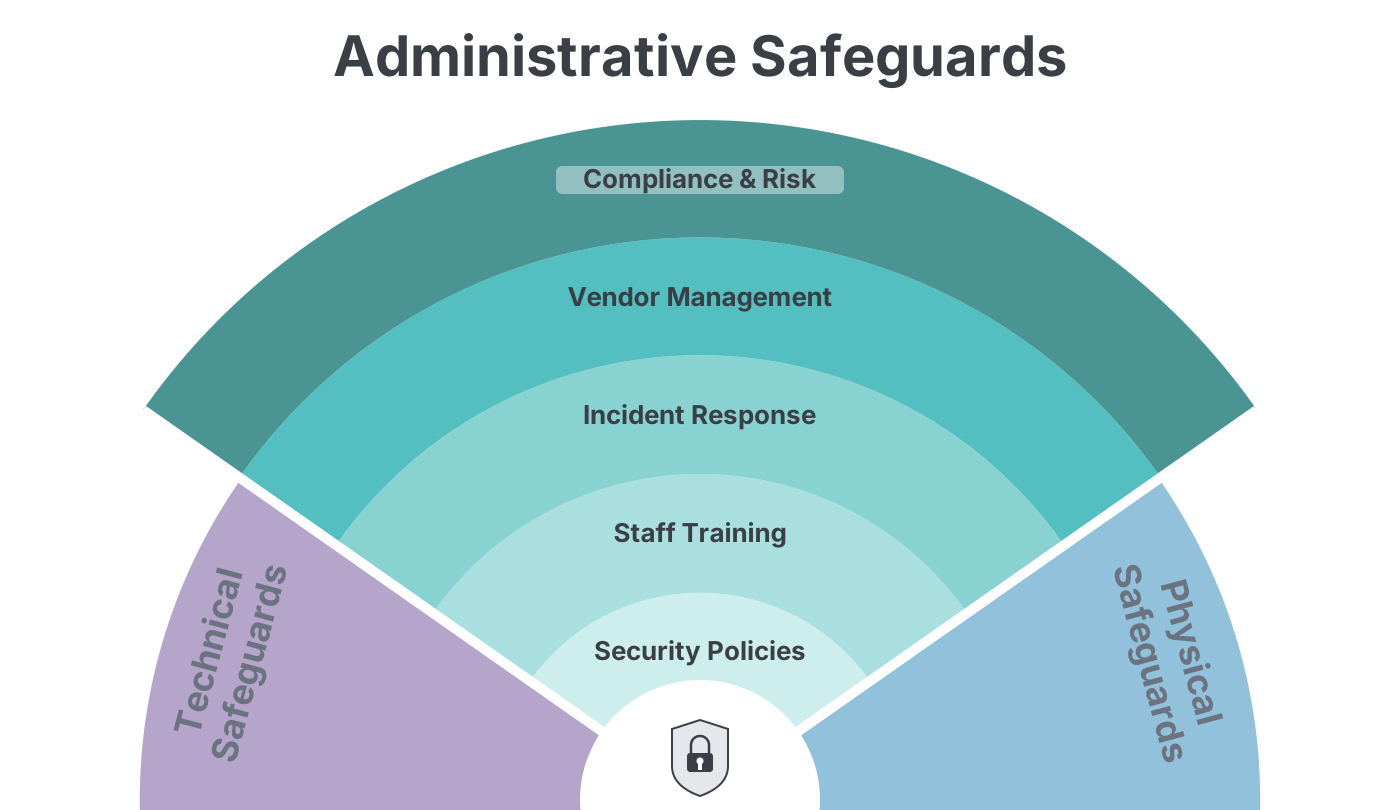
This is the problem that Administrative Safeguards solve. They are the policies, procedures, and people-layer of your security posture: the documented rules that govern how your business handles sensitive information, who is responsible for what, and how you respond when things don’t go according to plan.
In Part 1 of this series, we covered the Technical Tier - firewalls, endpoint protection, and encryption. In Part 2, we covered the Physical Tier - access control, surveillance, and device lifecycle. This final article closes the loop with the Administrative Tier: the governance layer that makes the other two actually work.
What Are Administrative Safeguards?
In cybersecurity frameworks like HIPAA, SOC 2, and ISO 27001, administrative safeguards are the policies, procedures, and assigned responsibilities that govern how an organization protects its data. They’re not software. They’re not hardware. They’re decisions - documented, communicated, and enforced.
HIPAA’s Security Rule dedicates an entire section to administrative safeguards (45 CFR §164.308), making them the most extensive category in the standard. That’s not an accident. Regulators understand that technical controls only go as far as the human systems around them.
For small and medium businesses in the GTA, this doesn’t mean a room full of compliance officers. It means clear, practical policies that your team can actually follow - and a technology partner who helps you put them in place.
Security Policies & Risk Management
Every sound security programme starts with a written Security Policy: a document that defines what your organization considers acceptable use of its systems, who is responsible for protecting data, and what the consequences are for non-compliance.
Under HIPAA, covered entities are required to conduct a formal Risk Analysis - identifying where sensitive data lives, what threatens it, and how those threats are being addressed. For any SMB handling personal or health information, this is the foundation everything else is built on.
We help clients develop and maintain:
- Written security policies that reflect their actual environment - not a generic template
- Risk registers that identify and prioritize real threats to their business
- Acceptable Use Policies (AUPs) covering devices, accounts, email, and remote work
- Annual policy reviews so documentation keeps pace with how the business actually operates
A policy that exists only as a PDF no one has read is not a policy. We work with clients to make sure these documents are understood, signed off on, and built into onboarding for every new team member.
Staff Training & Security Awareness
The most common entry point for a data breach isn’t a zero-day vulnerability. It’s a person - clicking a link they shouldn’t, reusing a password, or sharing access with someone who shouldn’t have it.
Security awareness training transforms your team from a liability into a line of defence. HIPAA requires covered entities to provide training to all workforce members as part of their security management process. For most SMBs, this requirement is also simply good sense.
Our staff training programme covers:
- Phishing recognition - how to identify suspicious emails, links, and attachments before they cause harm
- Password hygiene - why password reuse is dangerous, and how a password manager solves the problem without adding friction
- Device and data handling - what to do (and not do) with work devices, client files, and sensitive information
- Incident reporting - who to call, what to document, and how quickly to act when something looks wrong
Training isn’t a one-time event. We schedule refresher sessions and simulated phishing exercises to keep awareness current - because threats evolve, and so should your team’s knowledge.
Incident Response
When something goes wrong - a suspicious login, a lost device, a ransomware notification - the worst time to figure out your response plan is in the moment. Incident Response (IR) planning ensures your team knows exactly what to do before a crisis demands it.
HIPAA requires covered entities to have documented security incident procedures, including a process for identifying, containing, and reporting breaches. Even outside of regulated industries, having a plan is the difference between a controlled response and an expensive scramble.
We develop Incident Response plans that include:
- Clear escalation paths - who gets notified first, in what order, and through what channel
- Containment checklists - step-by-step actions to isolate affected systems and preserve evidence
- Breach notification guidance - what qualifies as a reportable breach under PIPEDA or HIPAA, and the timelines for notification
- Post-incident review - documenting what happened, what was learned, and what changes to make
A tested IR plan also demonstrates due diligence to insurers, regulators, and clients - evidence that your business handles incidents with the same professionalism it brings to everything else.
Vendor Management
Your security posture extends to every third party that touches your data. A cloud accounting platform, a payroll processor, a marketing automation tool - each one is a potential point of exposure if their security practices don’t meet your standards.
Under HIPAA, this is addressed through Business Associate Agreements (BAAs): contracts that legally bind any vendor handling Protected Health Information (PHI) to the same security obligations as the covered entity. Beyond HIPAA, vendor due diligence is simply responsible practice for any business handling client data.
We support clients with:
- Vendor risk assessments - evaluating whether third parties meet your security requirements before you sign
- BAA management - ensuring agreements are in place with every applicable vendor
- Software and subscription audits - identifying tools that are in use, who has access, and whether they’re still necessary
- Offboarding procedures - revoking access cleanly when a vendor relationship or an employee’s tenure ends
The vendor landscape for most SMBs has grown quietly over the years. A periodic review often surfaces accounts no one knew still existed - and risks no one knew they were carrying.
Compliance Audits
Administrative safeguards aren’t a one-time project. They require periodic evaluation to confirm that what’s documented reflects what’s actually happening - and that what’s actually happening meets the standard.
HIPAA’s Evaluation standard (§164.308(a)(8)) explicitly requires periodic technical and non-technical assessments of your security programme. For businesses pursuing or maintaining SOC 2 or other certifications, scheduled internal audits are a prerequisite.
Our compliance audit process includes:
- Policy gap analysis - comparing your current documentation against the applicable framework requirements
- Access control review - confirming that permissions match current roles, and that former employees or vendors no longer have access
- Device and software inventory - verifying that all assets are accounted for, managed, and up to date
- Evidence collection - documenting controls in a format ready for external review or certification
An audit is not an indictment. It’s a health check - a structured opportunity to find and close gaps before they become problems.
Bringing the Administrative Tier Together
The Administrative Tier doesn’t generate dashboards or trigger alerts. Its value is quieter: the confidence that comes from knowing your team is prepared, your vendors are accountable, and your response plan is ready.
By combining:
- Written security policies grounded in risk analysis
- Staff training that turns people into a layer of defence
- Incident response planning that removes panic from the equation
- Vendor management that extends your standards to every third party
- Regular compliance audits that keep the whole programme current
…you create the governance layer that makes your Technical and Physical safeguards actually hold. Security is not a product. It’s a practice - and the Administrative Tier is where that practice lives.
This is Defense in Depth: three tiers working together, each one reinforcing the others.
Frequently Asked Questions
Do I need formal security policies if I’m a small business? Yes - and arguably more than a large one. Small businesses are frequently targeted precisely because attackers assume their governance is weak. A written policy also creates legal protection: if a breach occurs, documented evidence that you followed a reasonable security programme significantly affects your liability exposure.
What’s a Business Associate Agreement, and do I need one? A BAA is a contract required by HIPAA between a covered entity (a healthcare provider, insurer, or clearinghouse) and any vendor that handles Protected Health Information on their behalf. PHIPA doesn’t use the term “BAA,” but similarly requires that you ensure any vendor handling personal health information meets the same privacy and security obligations you’re bound to. If your business is in healthcare or works with healthcare clients, and you share any patient data with a third-party tool or service, you should have a BAA (or equivalent language in your agreements) in place with that vendor. We can help you identify where they’re required and get them signed.
How often should we do a compliance audit? PHIPA and HIPAA require periodic evaluations without specifying a fixed schedule. Most compliance frameworks recommend annually, or following any significant change to your systems, team, or operations. We typically recommend an annual review with a lighter-weight quarterly check-in for clients in regulated industries.
We’ve never had a security incident. Do we still need an Incident Response plan? Yes - because the absence of a known incident doesn’t mean the absence of risk. It often means the absence of detection. An IR plan is also a condition of many cyber insurance policies and is evaluated during audits. Having one before you need it is significantly less stressful than building one during an active breach.
Secure solutions for compliance-critical business. You shouldn’t need to be an expert in availability, reliability, and uptime. Let us handle the complexity so you can have peace of mind.
Check Your Compliance Status | Connect with a Real Human
This is Part 3 of our three-part Defense in Depth series. Read Part 1: Technical Safeguards or Part 2: Physical Safeguards.